
White Dior Saddle Bag Dye Transfer Removal & Recolour – Luxury Restoration Case Study
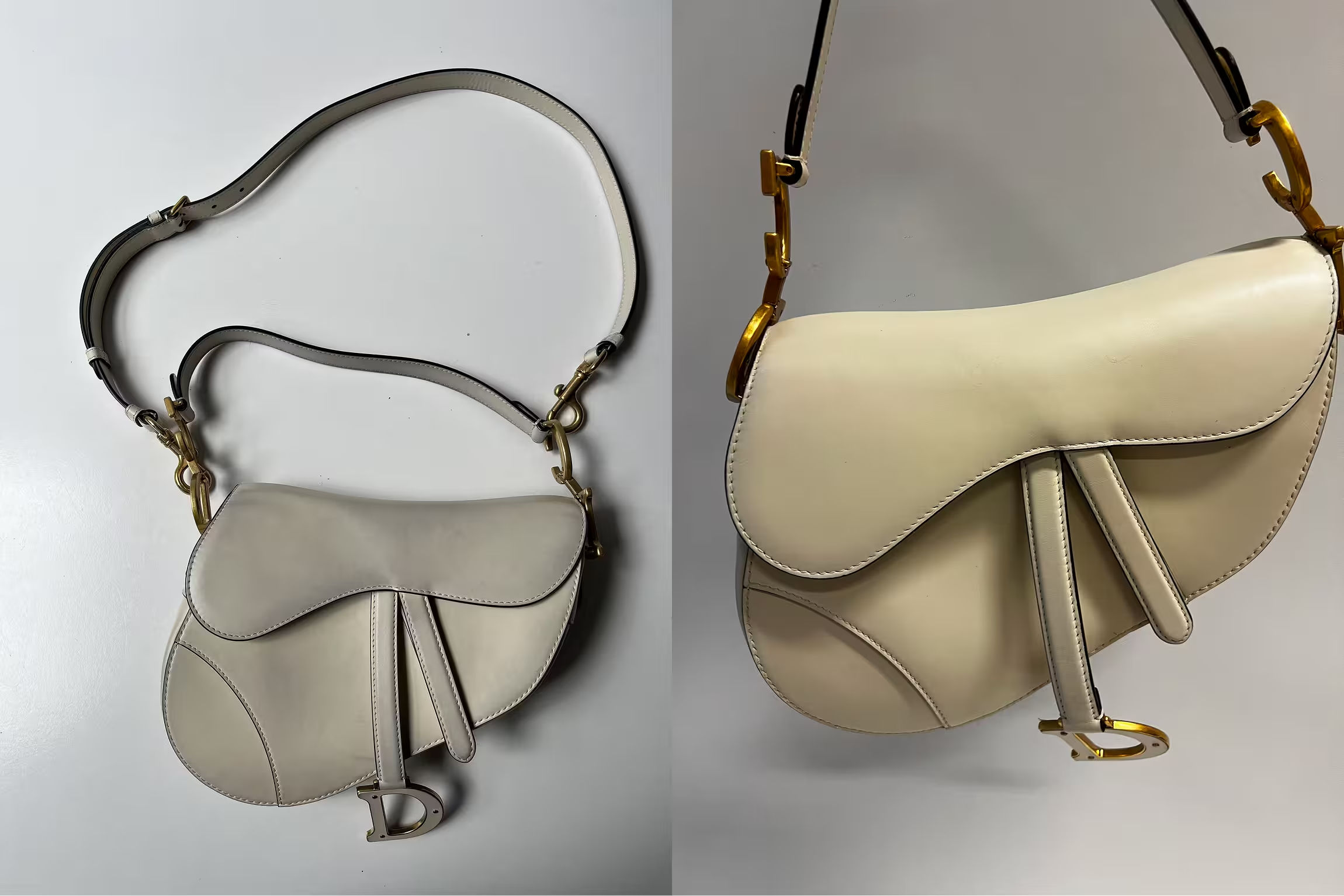

A white Dior Saddle Bag was brought to us with significant dye transfer staining. The owner had significant dark marks along the all panels and side curves — typical of colour migration from denim and darker garments.
White leather, while elegant and striking, is highly susceptible to dye transfer. In this case, the staining had penetrated beyond surface level, making standard cleaning insufficient. To restore the bag properly, a controlled dye transfer removal process followed by full panel recolouring was required.
Initial Condition Assessment
Upon inspection, the Dior Saddle Bag presented with:
- Heavy blue-grey dye transfer along contact zones
- Uneven discolouration across curved panels
- Slight gloss imbalance where prior cleaning attempts had occurred
- No major structural damage
The structure and stitching remained intact, making it a strong candidate for cosmetic restoration rather than replacement.
However, dye transfer removal on coloured leather is never a simple “lift and wipe” process.
Why Dye Transfer Removal Affects Colour
Dye transfer from clothing embeds itself into the top protective layer (top coat) of finished leather. In order to remove deep-set staining safely, the affected top layers must be carefully reduced or partially removed.
The Technical Reality
When the top coat is reduced:
- Original colour consistency is disrupted
- Protective seal integrity is compromised
- Surface sheen becomes uneven
- Pigment loss may occur
This means that effective dye transfer removal often requires follow-up recolouring to achieve a uniform, refined result.
Attempting to spot-clean only can leave visible patches or halos — something unacceptable in luxury handbag restoration.
The Restoration Process
Our approach prioritised balance — removing embedded dye while preserving as much of the original leather integrity as possible.
Controlled Stain Reduction
Specialised solutions compatible with fine luxury leather were used to gradually reduce dye transfer without oversaturating the material.
The process was incremental and monitored closely to prevent fibre weakening.
Surface Preparation
Once the staining was lifted to the safest achievable level, the surface was prepared for pigment correction. Any areas with compromised top coat were stabilised.
Precision Recolouring
A custom-matched white pigment blend was developed to restore consistency across affected panels.
Multiple thin layers were applied to ensure:
- Even tone
- Seamless blending
- No over-thick coating
- Maintained leather flexibility
Each layer was cured and inspected before proceeding.
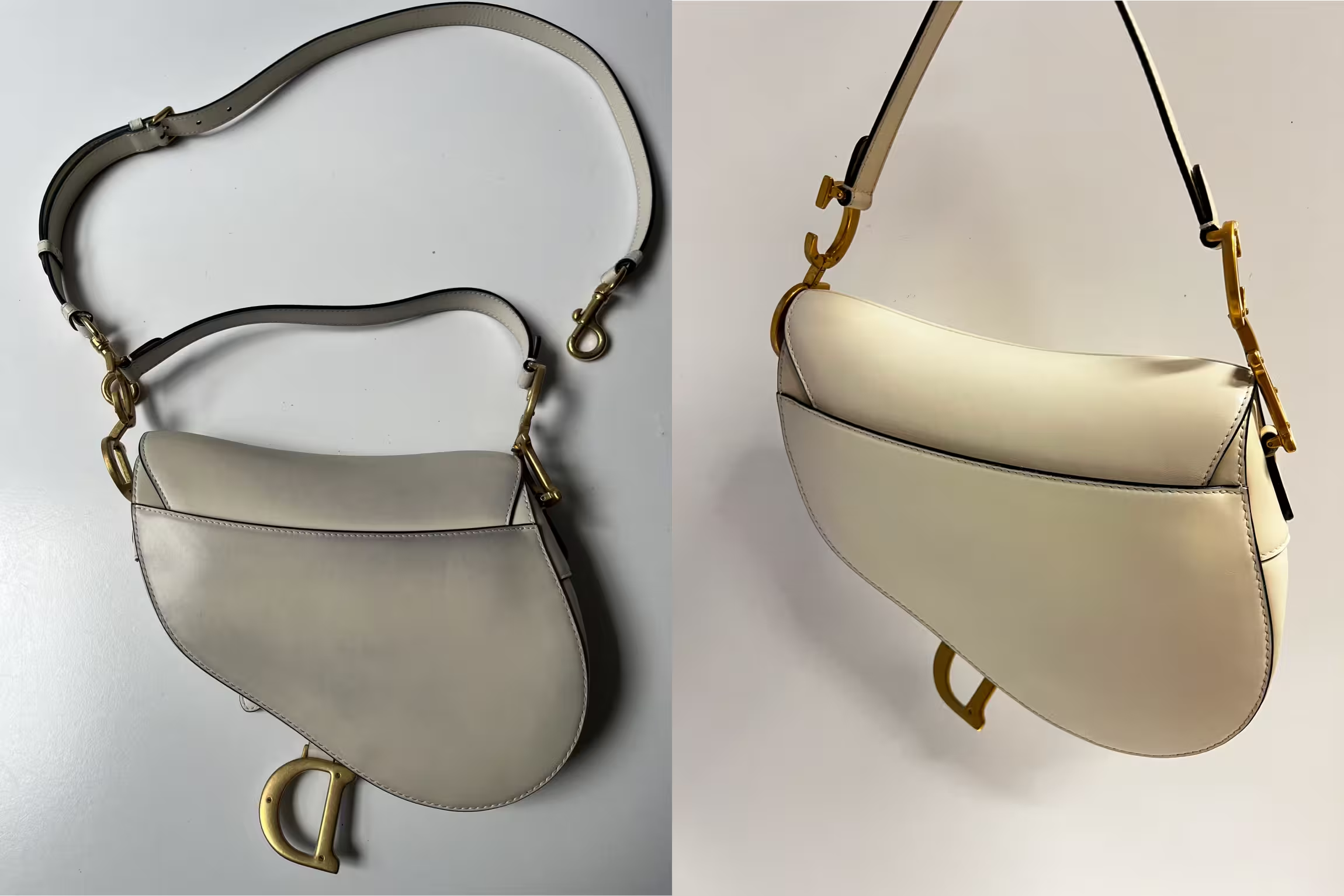
Protective Reseal
A compatible top coat was applied to restore protection and achieve a refined satin finish consistent with Dior’s original aesthetic.
Final Outcome
The result was a dramatically improved surface appearance with uniform colour restoration and reduced evidence of prior dye transfer.
Importantly:
- The leather retained flexibility
- No heavy masking was applied
- Stitching and hardware were protected
- The restoration remained sympathetic to the original construction
While restoration cannot reverse fibre-level ageing, the cosmetic integrity of the bag was successfully rebalanced.
Preventing Dye Transfer on White Designer Bags
White designer handbags require proactive care.
To minimise future staining:
- Avoid contact with dark denim
- Store in dust bags when not in use
- Apply compatible leather protectants
- Address stains early before penetration deepens
Understanding restoration expectations is critical — particularly when dealing with dye transfer. In many cases, recolouring is not an upsell but a necessary step following proper stain removal.
Related posts
Chanel Bag Repair Sydney
Bag Corner Wear Repair
%202.avif)
