
Bag Corner Wear Repair
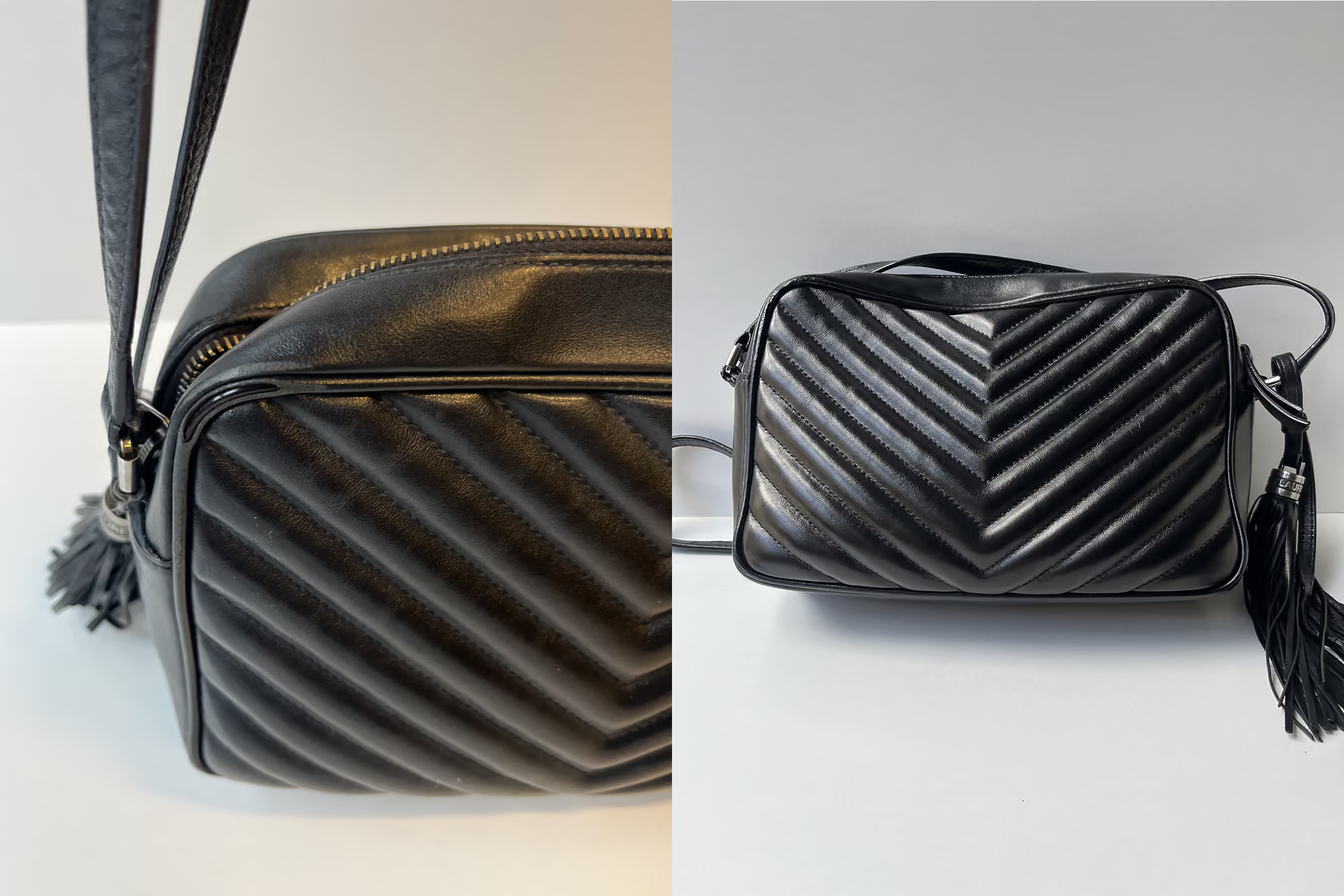

Corner Wear on Designer Bags: The Small Repair With the Biggest Impact
Look at any well-used handbag and the story is in the corners. They touch every surface the bag is set down on, rub against everything it’s carried past — and they’re the first place colour wears through to pale base leather. The upside: corner restoration is among the highest-impact, lowest-cost repairs in our atelier.
.avif)
Why corners fail first
Corners concentrate abrasion on a few square centimetres, and on structured bags they also carry the frame’s pressure from inside. Textured leathers like caviar and Saffiano show it soonest — the raised grain wears its colour at the peaks, reading as “white corners” long before the leather itself is compromised.
.avif)
How corner rebuilding works
Worn corners are cleaned and prepared, abraded fibre is smoothed, colour and finish are rebuilt in layers matched to the surrounding panel, and the texture is recreated so the repair disappears into the grain. Where wear has gone further - thinning leather, exposed structure — corners are reinforced or patched from behind before refinishing. Corner work pairs naturally with edge repair and often features in pre-sale spruce-ups, where it moves condition grades meaningfully.
.avif)
Prevention
Set bags down on their base, not tilted onto a corner; use bag hooks in cafés rather than floors; and treat base-corner scuffs early - colour rebuilt over sound leather lasts far longer than repairs to worn-through corners.
Corners gone pale? Photograph each corner straight-on and we’ll quote the set.
FAQ
Will repaired corners wear again? Eventually - corners always take the most friction - but professional finish over sound leather is durable, and touch-ups are simple.
Can worn-through corners be saved? Usually yes: thinning corners are reinforced from behind before refinishing. Fully perforated corners need patching, still very achievable.
Is corner wear normal or neglect? Completely normal, it’s the natural first wear point on any carried bag, and the most routinely restored.
Related posts
%202.avif)
